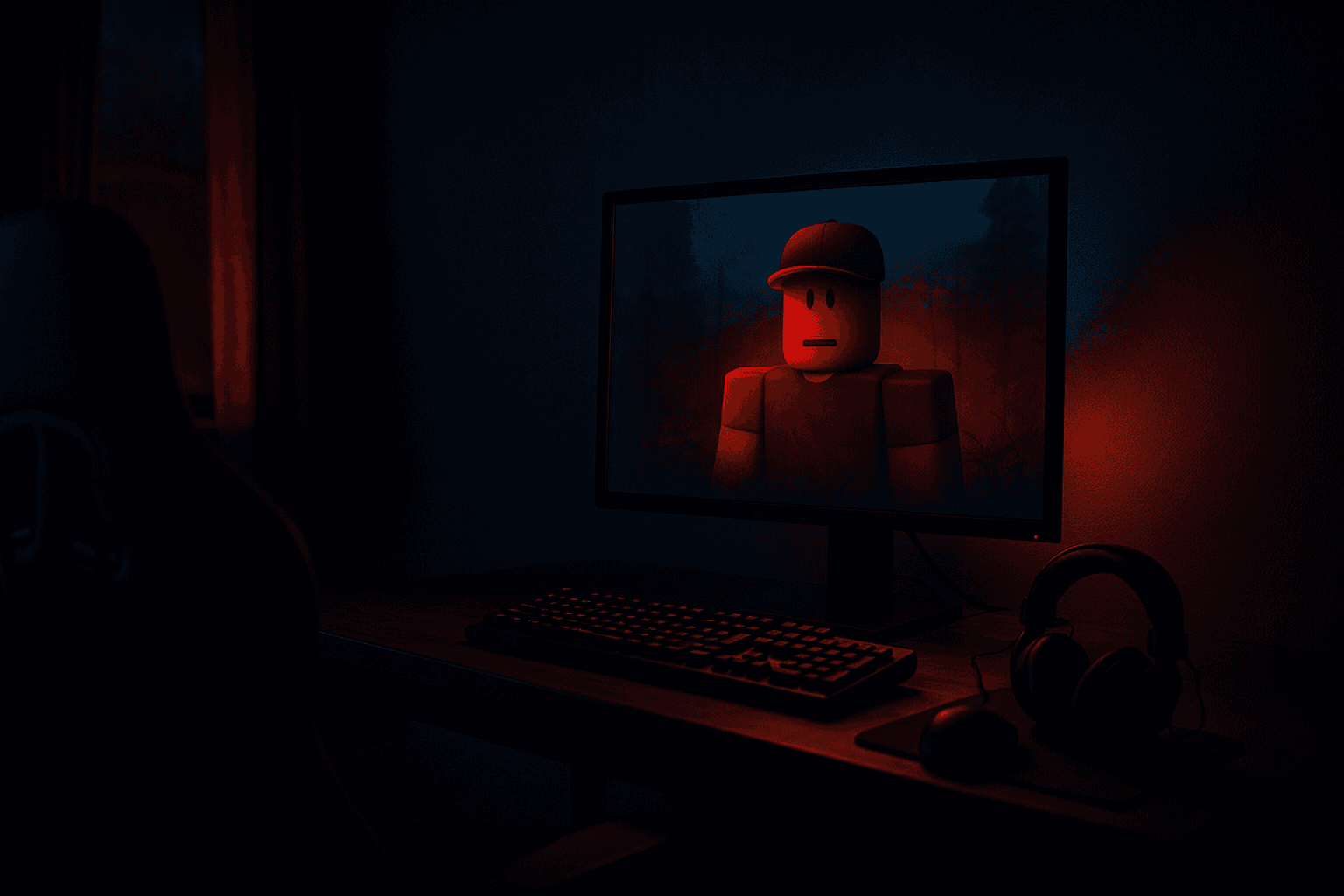
Roblox shipped voice chat to verified users back in 2022, expanded eligibility in 2024, and lowered the age floor again in early 2026. Yet walk into the top fifty experiences on any given Tuesday and most of them still have voice disabled at the experience level.
That gap — between what the platform allows and what developers actually enable — is the most interesting story in Roblox safety right now. It is not really about microphones. It is about who carries the moderation cost when something goes wrong.
How Roblox Voice Chat Actually Works In 2026
Voice on Roblox is opt-in at three separate layers, and most users only ever think about the first one. The full stack matters because each layer shifts liability somewhere different.
The platform layer requires age verification through ID upload or a third-party check, which Roblox processes through Persona and Veriff depending on region. Once verified, the user can toggle voice on in account settings — but that toggle does nothing if the experience they enter has voice disabled.
The Three-Layer Permission Model
- Platform eligibility. Age-verified, region-permitted, and account in good standing. Roblox controls this layer through verification vendors and ban history.
- Experience-level enablement. The developer flips a switch in Studio. If it is off, no microphone input is accepted regardless of user settings.
- Per-user toggle. Even inside a voice-enabled experience, the individual user can mute themselves or others, and parents can disable voice entirely from the parental controls dashboard.
Every layer above the bottom one is a liability buffer for someone. Roblox uses the platform layer to shield itself from underage exposure claims. Developers use the experience layer to shield themselves from moderation costs they cannot absorb.
The Moderation Infrastructure Behind The Microphone
Roblox moderates voice in near real time using a system the company calls Voice Safety Classifier, an in-house ML model trained on flagged audio samples. The model listens for policy violations across roughly fifteen abuse categories — slurs, sexual content, threats, doxxing attempts, and grooming patterns among them.
According to Roblox's own 2025 transparency disclosures, the classifier processes voice at the segment level rather than the utterance level, meaning short bursts of policy-violating speech can slip through if they fall under the segment boundary. That latency window is roughly fifteen seconds in production, down from forty-five seconds at the 2022 launch.
What The Classifier Catches And What It Misses
The classifier is reasonably good at slurs, screamed threats, and overtly sexual language. It is much weaker on context-dependent abuse — sarcasm, coded language, and the slow grooming patterns that operate over days rather than minutes.
What's more, the classifier is English-first by a wide margin. Spanish, Portuguese, Japanese, and Korean coverage has improved measurably since 2024, but moderation efficacy in those languages still lags the English baseline by an estimated 15 to 25 percentage points based on Roblox's own published benchmarks.
Age Verification: The Number Everyone Quietly Doubts
Roblox requires ID-based age verification for voice eligibility. The official position is that this gate is robust. The unofficial reality, well-documented in 2025 research from the Internet Safety Labs and echoed by independent journalists at 404 Media, is that verification can be bypassed with parent IDs, sibling IDs, and in some markets, low-cost document services.
This is not a Roblox-specific problem — every platform that uses ID verification faces the same leakage — but it matters more here because the median user is younger. When the verification fails, the failure mode is a thirteen-year-old gate that lets through a ten-year-old, not a thirty-year-old gate that lets through a twenty-eight-year-old.
| Verification Method | Estimated Bypass Rate | Roblox Use Case |
|---|---|---|
| Government ID upload | Low to moderate | 13+ voice eligibility (default) |
| Facial age estimation | Moderate | Supplementary in select regions |
| Parental consent + ID | Higher (parent ID reuse) | 10-to-12 pilot eligibility |
| Phone + credit card | Low | Adult-only experience access |
Roblox's age-segmented account rollout earlier this year was designed in part to reduce the consequences of verification leakage. Even if a younger user slips through, the experience set, chat rules, and voice eligibility default to the more restrictive tier. We covered that rollout in depth in our breakdown of Roblox's age-based accounts system.
Why Top Games Still Refuse To Turn It On
Here is the part the safety conversation usually misses. The economic case against enabling voice — for a developer running a top-100 experience — is substantially stronger than the safety case for enabling it.
Voice changes the social fabric of an experience in ways that directly affect retention, session length, and average revenue per user. For some genres that change is net-positive. For most of the genres dominating the front page, it is net-negative or actively harmful.
The Retention Math
A roleplay game like Brookhaven or Adopt Me runs on text-driven ambiguity. Players project personalities onto avatars and fill in the gaps with their own imagination. Voice chat collapses that ambiguity instantly — the eight-year-old playing a glamorous wedding-planner character now sounds like an eight-year-old, and the social fiction breaks.
For tips on staying social in text-driven experiences, our Brookhaven RP tips guide and Adopt Me tips guide cover the in-game etiquette that voice would actually disrupt. The developers know this. They have the session-length data to prove it.
The Moderation Cost Math
Roblox handles platform-level voice moderation, but reputation costs flow downstream to the developer. A single viral TikTok of a child being harassed in voice chat inside your experience can erase a month of growth, regardless of whether the platform classifier caught the violation within the official fifteen-second window.
The Genre Split
- Competitive shooters and survival games. Voice is a strict win condition — coordination matters, callouts matter, and players self-select into voice-enabled lobbies. Many of these have enabled voice or built in-house proximity voice systems.
- Roleplay and life-simulator experiences. Voice breaks the fiction. Almost universally disabled, even when the developer is technically eligible.
- Anime fighters and gacha experiences. Voice adds little to a combat loop driven by mechanical execution and rerolls. Most leave it off, focusing moderation budget on chat-based scam detection instead. Genre-wide patterns hold across titles like the ones we cover in our Anime Vanguards tips guide and Blue Lock Rivals tips guide.
- Horror and survival sandbox. Voice is genuinely additive — proximity voice in a horror experience is a feature, not a liability. Our 99 Nights in the Forest tips guide covers a survival title where coordination would benefit from voice, though the developer has so far kept it text-only.
The Proximity Voice Workaround
A handful of developers have built proximity voice systems on top of Roblox's voice API, restricting audible range to a few studs around the player. This is a clever moderation hedge. It reduces the reach of any single bad actor from a full server to a small radius, which proportionally reduces the reputation blast radius of a viral incident.
Proximity voice is not a moderation solution — the same harassment is just as harmful at three studs as at three hundred — but it changes the discoverability of incidents. Bystanders are fewer, screen recordings are harder to frame compellingly, and the social cost calculus tilts.
What This Means For Players
If you are playing a top-100 experience and voice is off, that is a deliberate product decision by the developer, not a Roblox limitation. Requesting it in the experience's Discord rarely moves the needle, because the decision is rarely about player demand — it is about a moderation cost the developer has decided they cannot absorb.
For the experiences that do enable voice, the per-user toggle is meaningful. Muting individual players is fast, reporting works, and the in-experience moderation tools have improved substantially since 2023. The platform-level voice ban — a permanent loss of voice eligibility across all of Roblox — is a real consequence and is issued more aggressively than most users realize.
What This Means For Developers
The question is no longer technical. The voice infrastructure works. The question is whether your genre is one where voice adds enough retention to offset the moderation overhead, and whether your community management bandwidth can absorb the inevitable incidents.
For most experiences, the honest answer is no. That is not cowardice and it is not negligence — it is a defensible product call. The developers who have enabled voice in 2026 are almost entirely in genres where coordination is mechanically necessary, and even there, the rollouts have been cautious.
The Trajectory From Here
Roblox has been clear that voice is a strategic priority. The platform's roadmap points toward broader eligibility, better moderation latency, and tighter integration with the age-segmented account system. The Cube foundation model work we covered in our piece on Roblox's Cube foundation model is also relevant here — generative moderation models are part of the same investment thesis.
Yet platform investment does not change the developer math overnight. Until the reputation cost of a voice incident becomes meaningfully lower than it is today — through faster moderation, better classifier multilingual support, and clearer liability allocation — the top experiences will keep voice off by default, regardless of how easy Roblox makes it to flip on.
For broader Roblox safety and ecosystem coverage, our Roblox anti-cheat breakdown covers the parallel investment in exploit prevention, and our best Roblox games list tracks which top experiences have enabled voice and which haven't.
Frequently Asked Questions
Can a 12-year-old use Roblox voice chat?
As of early 2026, verified 10-to-12 accounts have access to voice chat in a limited pilot, with stricter moderation defaults and parental consent requirements. Outside the pilot, the standard eligibility floor remains 13 with age verification.
Does Roblox record voice chat?
Roblox processes voice in near real time through its classifier and retains short audio snippets when a violation is flagged, for moderation review and appeals. Routine voice traffic is not stored long-term, per the company's published privacy disclosures.
How do I turn off voice chat for my child?
Parents can disable voice chat entirely from the parental controls dashboard linked to a parent account. The setting overrides the child's account-level toggle and persists across all experiences regardless of developer settings.
Why is voice chat disabled in Adopt Me and Brookhaven?
Both experiences are roleplay-driven, and voice collapses the social fiction that drives their retention. The developers have indicated through community channels that the decision is deliberate and not currently under review.
What happens if I get reported for voice chat abuse?
Reports trigger a review by Roblox's moderation pipeline, combining automated classifier evidence with human moderator judgment. Consequences scale from temporary mutes to permanent voice eligibility bans, with appeals available through the standard support flow.